Where Fear Meets Water

What’s the thing you’re most scared to do? What would it take to get you to do it?

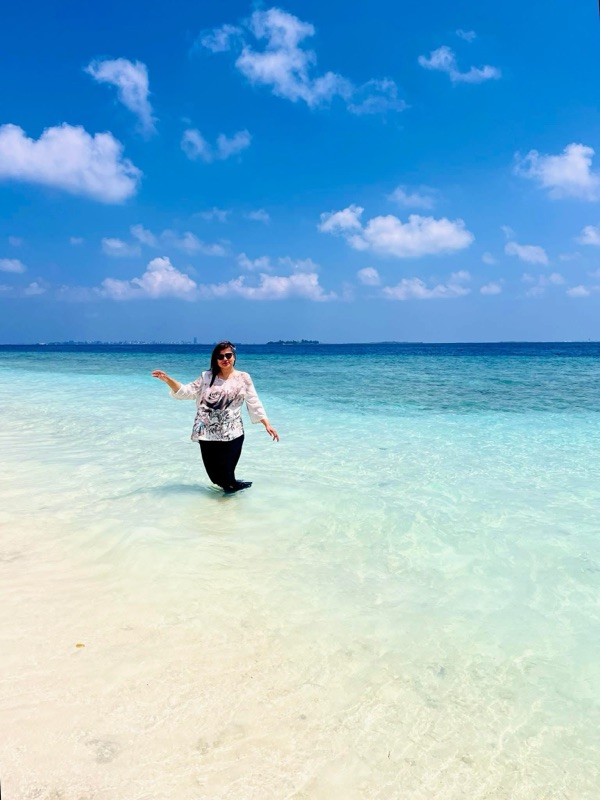
If you ask me what I’m most scared to do, the answer is simple and immediate: swim.

What makes it confusing is that I already know how to swim. I’ve learned the technique. My body understands the movement. And yet, fear arrives every time I step into the water

As soon as I enter the pool, my mind drifts to what lies beneath the surface. I become overly conscious, of the depth, of my legs, of the possibility that something could go wrong. Thoughts rush in uninvited: What if I lose control? What if my legs are pulled downward? What if I drown? The water may be still, but my thoughts are not …

This fear isn’t about a lack of skill. It’s about trust, trusting the water, trusting my body, trusting myself to stay afloat even when my mind wants to prepare for the worst …

So what would it take to move past this fear?

Not pressure, and not forcing myself to be brave. What helps is being gentle, entering the water slowly, staying where I feel safe, breathing calmly, and stopping whenever I need to. I remind myself that I know how to swim and that, in this moment, I am safe …

I know fear doesn’t go away all at once. Maybe the goal isn’t to get rid of the fear, but to swim with it, until the water feels less frightening and more familiar …

Best of luck to me 🏊

#roksanatales
On Decluttering, Memory and Leaving Light Behind

I came across the idea of Swedish death cleaning today, and it stayed with me longer than I expected. Not because of the word death, that part feels inevitable and oddly neutral, but because of the tenderness behind the idea: easing the weight for those we love …

Margareta Magnusson writes about sorting not as an ending, but as an act of care. A way of saying, I see you. I don’t want to leave you overwhelmed. That makes sense to me. Deep sense …

Sorting through a person’s life after they are gone is a herculean task. Grief itself already bends the spine; belongings can make it heavier. Each object asks a question: Should I keep this? What did it mean to them? Am I dishonouring them if I let it go? I wouldn’t want my family to carry that weight on top of their sorrow …

The biggest declutter I dream of is invisible, yet massive: millions of photographs. Faces, skies, meals, moments, saved out of love, fear of forgetting, or the hope that one day they’ll matter again. I wonder if they will feel like treasures… or burdens. Perhaps it’s not about deleting everything, but about choosing what truly tells a story …

Then there are my words. Countless musings, half-written thoughts, simple musings, & reflections stored away for “someday.” I imagine my grandchildren, & great grandchildren, curious, gentle readers, finding joy not in everything I ever wrote, but in the pieces where my voice is clearest. Maybe my task is not to preserve all my words, but to organise them with intention, like letters rather than clutter …

And the coins. Oh, the coins! Little metallic memories gathered from here and there. Each one once felt like a discovery, a moment of wonder. I don’t want to lose that magic, but I also don’t want them to become meaningless weight in a drawer. Perhaps they deserve a story, a frame, a reason to exist beyond accumulation …

Magnusson says you don’t have to be old to begin. Even in your thirties, when drawers no longer close and closets resist you, it’s already time. I like that permission. It takes death out of the centre and places living there instead …

I don’t know how far away I am from the end, and maybe that doesn’t matter. What matters is this: decluttering feels less like letting go, and more like choosing what love looks like when I’m no longer here …

For now, I will begin gently.
Not with fear.
With care.

#roksanatales

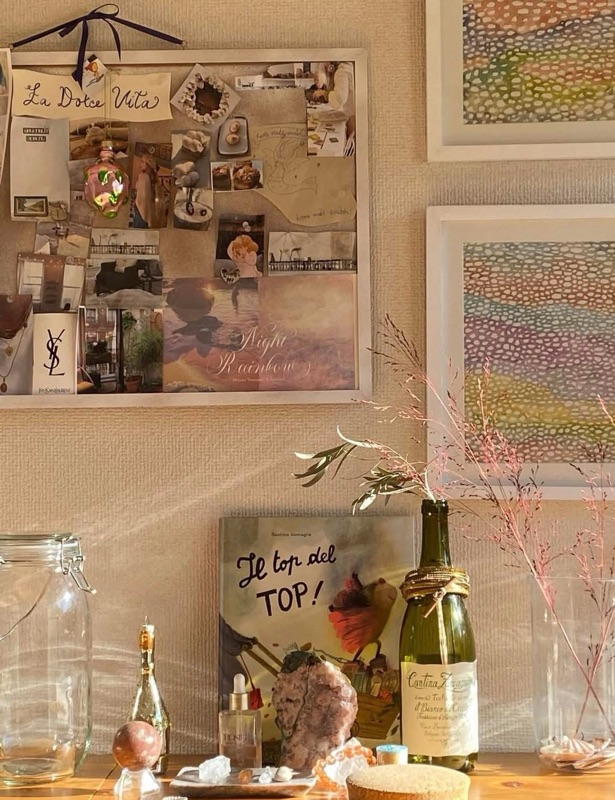
a vision board of decluttering and organising things in an aesthetic style

Letting The Mind Breathe

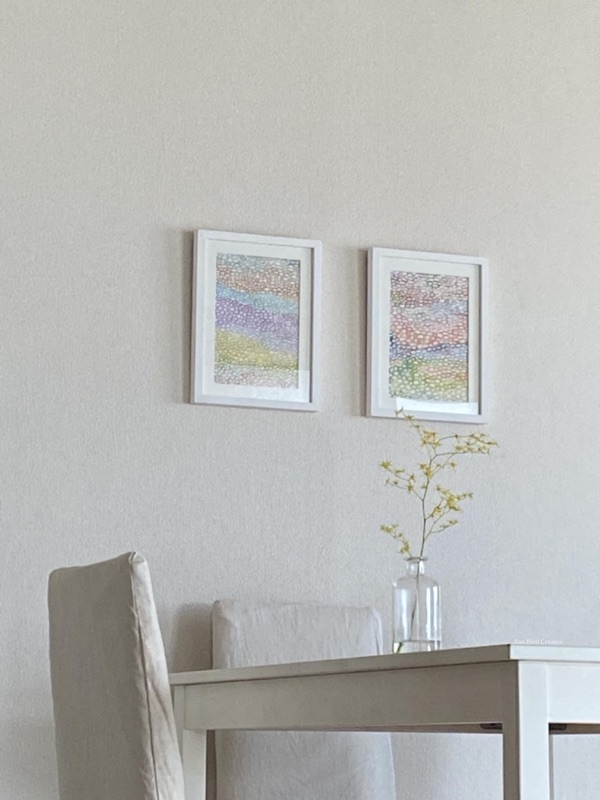
I began these mindful drawings in a fragile, unsettled state of mind. My thoughts felt scattered, restless, overlapping, too many at once. So I picked up colours and let them move without planning, without forcing sense or structure. I didn’t try to control the flow; I let the flow carry me. As the colours settled, so did parts of me.

While doing this, a thought stayed with me: Is this even anything? Later, that thought came back through others. Some asked, “What kind of painting is this?” Some said, “It has no meaning.” Some looked longer, trying to extract logic, trying to name it, trying to make sense of it. Others simply found it beautiful.

I noticed how familiar this felt. How people always want to define, label, approve, or dismiss. How art becomes a mirror for their own need to understand or control. And I realised, this is not new. This is human nature.

But this wasn’t made for explanation. It was made for survival. For breathing. For letting my scattered thoughts land somewhere gentle

I don’t need everyone to understand it. I don’t need to defend it. People may say so many different things. They always will. And what we need to do is to continue to do what we do, quietly, honestly, and with care! That’s enough!

And somehow, in the midst of all this, these paintings reside in a foreign land, resting there with a grace that still surprises me!

#roksanatales

Residing Happily, In Tokyo, Japan

The Invisible Work of a Creative Life

When people ask, with curiosity, what I do all day, I usually smile and reply, ‘Nothing much.’ It is a convenient answer, simple, unprovocative, and often enough to satisfy the questioner. The conversation moves on, and so does life

But the truth is far fuller

Much of my day unfolds inside a creative bubble. It is a space where ideas are constantly forming, dissolving, and reshaping themselves. I move from one thought to another, from making to unmaking, from observing to imagining. This kind of work rarely announces itself loudly. There are no fixed hours, no visible milestones, no obvious outputs that can be easily measured or displayed

In a world that often values productivity by numbers and material outcomes, such labour can appear weightless, almost invisible. Creative work is frequently compared to financial gain, and when it does not immediately translate into income, it is easily misunderstood or undervalued. Yet the rewards it offers are profound: a sense of purpose, inner clarity, emotional resilience, and the satisfaction of creating something meaningful from within

That said, it would be dishonest to romanticise creativity as something detached from real-world needs. Financial independence matters. It matters for everyone, and artists are no exception. The ability to sustain oneself lends dignity, stability, and freedom to any form of work, creative or otherwise. Passion alone cannot replace the need for security, nor should it be expected to

Perhaps the gap lies not in the work itself, but in how we perceive it. Not all labour is loud. Not all effort leaves visible footprints. Some of the most valuable work happens in silence, slowly, patiently, and away from public validation

To say ‘nothing much’ is easier. But in reality, it is a life silently lived in attention, imagination, and continuous becoming. And that, too, is work, deep, deliberate, and very real

Don’t you think so?

#roksanatales