Wouldn’t it be nice… To arrive with something Made by hand A page where colors once Listened to your breath … A small painting carrying a piece of your day Not bought, but felt, and gently given …
Wouldn’t it be nice… To gift a folded note, written slowly With words that sat beside Your heart for a while Ink becoming warmth in Someone else’s hands A letter that lingers longer Than any object …
Wouldn’t it be nice… To bring a pressed flower From a walk you loved Held between pages like a Secret of the earth A moment of stillness Wrapped in paper A memory, passed from you to them …
Wouldn’t it be nice… To offer a jar filled with tiny intentions Little lines of hope, of courage, of light So on heavy days, they can open one And find you there, in a sentence …
Wouldn’t it be nice… If our gifts carried pieces of our presence Instead of things that fade Without a story .. A drawing, a word, a fragment of soul Simple, and somehow, enough …
Some days, I’m more aware of my shortcomings than I allow others, or myself to see. I see where I fall short, where I hesitate, where I choose comfort over courage. I know my flaws. I do not hide them from myself, and I cannot hide them from God.
And yet, when I pray, something honest rises within me.
I come as I am, not polished, not proud. My prayers are not rehearsed performances; they are pure offerings shaped by need, regret, hope, and longing. I pray because despite everything, I still believe in mercy. I still believe in being heard
Perhaps this is what sincerity truly means. It’s not the absence of sin, but the refusal to turn away. I am learning that returning, again and again, is itself a form of faith. Even when I feel undeserving, I show up. Even when my heart is tired, I speak
Thats how always humbly I place my imperfections in God’s hands. Because I believe, no other can handle it like Him. I do not ask to be seen as perfect, only as honest. And for always, that feels like enough
#roksanatales
.
.
.
.
.
Now tell me, Where do you place your imperfections?
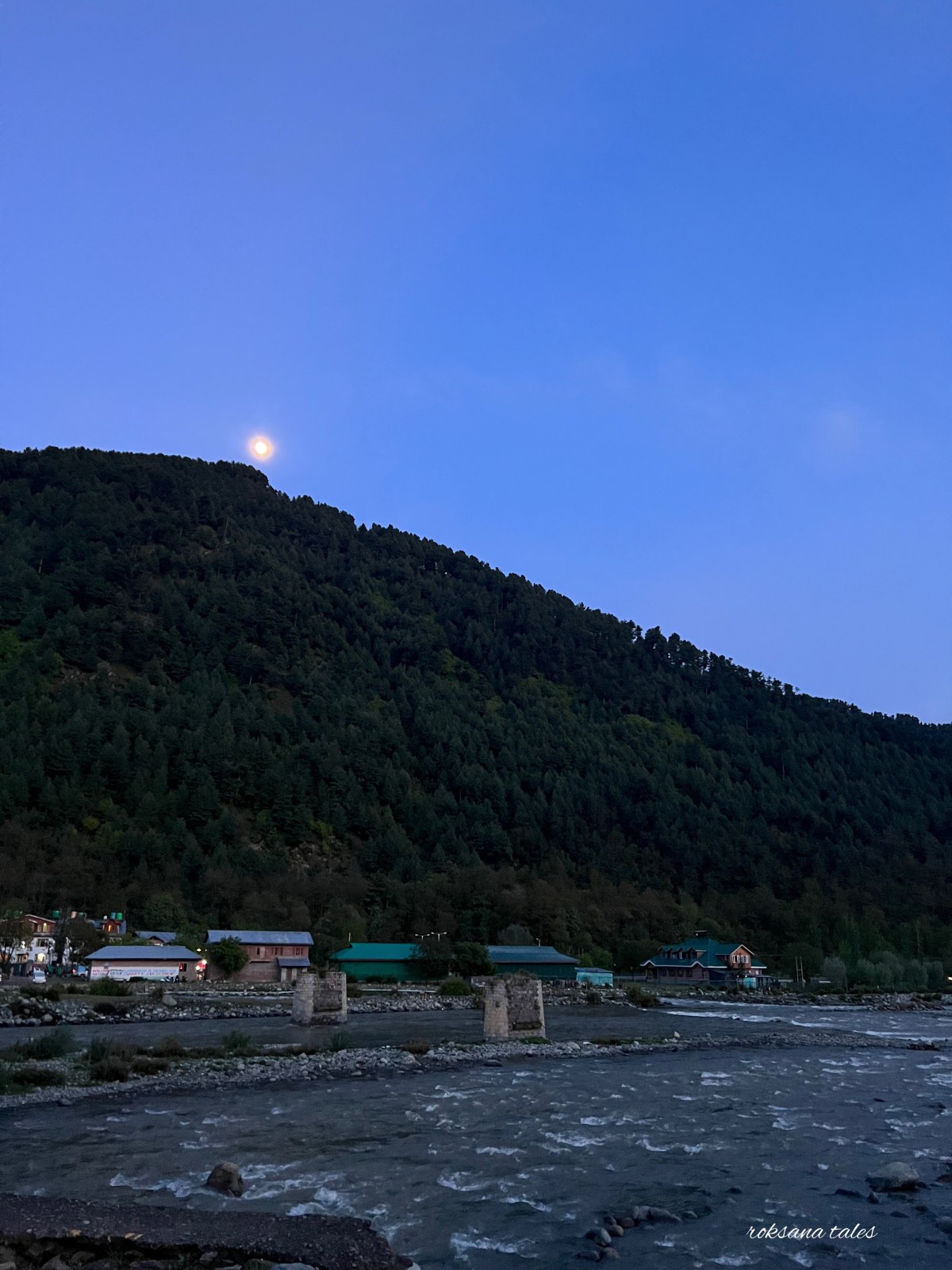
There was a small village at the foot of a mountain. The village was called Shantipur. In that village lived a little girl named Turona. Every day, Turona would gaze at the big mountain from afar. In the morning, the mountain sparkled in golden sunlight, and by evening, it glowed in a soft reddish hue …
One day, Turona decided she would climb to the top of that mountain. Everyone said, ‘It’s too high, you won’t be able to.’ But Turona smiled and replied, ‘How will I know if I don’t try?’ …
The next morning, she set off with a bottle of water, some fruit, and a notebook. On the way, she grew tired, her feet ached on the stones, yet she didn’t stop. Sometimes she sat down to rest, listening to the sound of the wind and watching the birds fly …
Finally, after noon, she reached the top of the mountain. Looking down, she saw how beautiful her little village was, green fields, tiny houses, and a silver river flowing gently through it …
In her notebook, Turona wrote, ‘The joy of reaching the highest place only comes when you refuse to give up.’ …
Then she closed her eyes and took a deep breath. The air smelled of freedom, and inside her heart, there was peace …
She realized that the real mountain wasn’t outside, but within her. And that day, she had conquered both …
#roksanatales
How we used to write short stories when we were young! I remember how every night I’d make up stories to tell my little sisters before they fell asleep. I used to jot down bits of them in my notebook too. Often, I’d go up to our rooftop with that notebook, gazing at the distant sky until my thoughts drifted away. I wanted to write, and sometimes, I did. Other times, I simply got lost in my own imagination!
I’m sure it happened with you too!
Anyways, now tell me, What is the ‘mountain’ in your own life that you’ve been afraid to climb? Or tell me, When was the last time you tried something even though others doubted you?
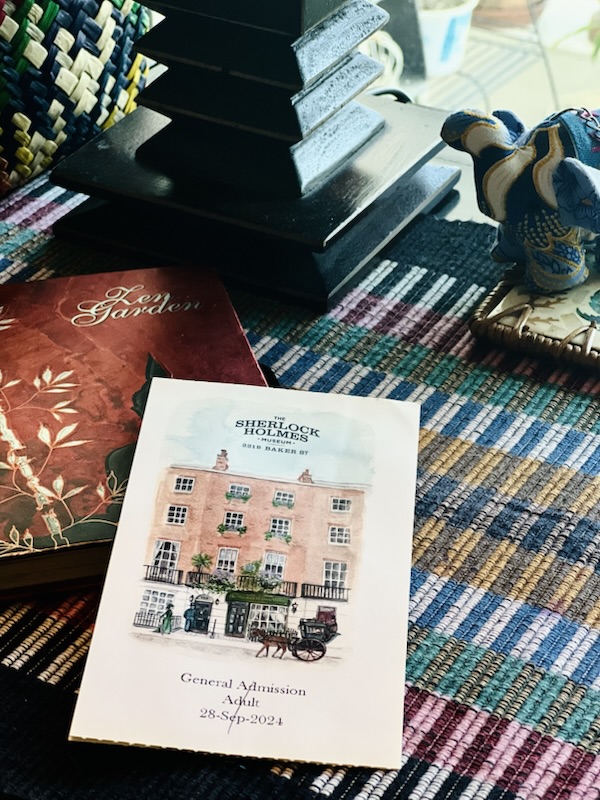
Little treasures rest Whispers of time in my hand Treasures never fade …
An entry ticket to the Sherlock Holmes Museum on Baker Street with my little sister in London. It was a bright and sunny day, and we had such a wonderful experience exploring the museum. Walking through the rooms, seeing the famous detective’s study, and imagining the stories felt magical. This little ticket is now a cherished memory of laughter, curiosity, and a special day spent together …
Life’s simple joys are all around; they only need your attention and appreciation to become cherished memories …
Love this poem and read it many times. Do you love such poems?
I love many of them …
First and foremost, allow me to share Elizabeth Barrett Browning’s Sonnet 43, ‘How Do I Love Thee?’
It begins with the iconic lines:
‘How do I love thee? Let me count the ways…’
These two lines alone contain volumes of meaning, and I find myself revisiting them often …
There’s another poem, I love, and that is ‘Hope’ by Emily Dickinson
‘Hope’ is the thing with feathers – That perches in the soul – And sings the tune without the words – And never stops – at all’ …
I may not be good at recitation, but I have a deep passion for reading and appreciating the intricate artistry of language. The way words are arranged to evoke emotions, convey wisdom, and capture the essence of life, love, and nature resonates deeply with me. It’s in these moments, amidst the twists and turns of expression, that I find myself enamored with the beauty of language and the emotions it encapsulates …
See, when you read ‘Stopping by Woods on a Snowy Evening’ by Robert Frost, won’t you just love this famous poem?
‘The woods are lovely, dark and deep, But I have promises to keep, And miles to go before I sleep, And miles to go before I sleep’ …
Here’s another eloquent excerpt from the renowned poem ‘The Road Not Taken’ by Robert Frost:
‘Two roads diverged in a wood, and I— I took the one less traveled by, And that has made all the difference.’
This poem resonates deeply with me and holds a special place in my heart, as I often find myself reflecting on its message of making pivotal choices that shape one’s journey.
I have a profound admiration for another poem, namely ‘The Love Song of J. Alfred Prufrock.’ Its expression conjures the sense of companionship, as if the lover is spiritually present, ensuring one is not alone:
‘Let us go then, you and I, When the evening is spread out against the sky’ …
Isn’t it beautiful?
I’m certain many of you appreciate these poems. There are numerous others, but I’d like to share just a few of my absolute favorites with you all, such as ‘Leisure’ by William Henry Davies:
‘What is this life if, full of care, We have no time to stand and stare … No time to see, in broad daylight, Streams full of stars, like skies at night.
No time to turn at Beauty’s glance, And watch her feet, how they can dance.’
To selectively share excerpts from the poem is my means of conveying:
Please delve into the poems I’m presenting here— read them when solitude surrounds you, read them in the company of your beloved, read them among friends, read them with strangers, read them in tranquility, read them amidst chaos … but above all, I hope you read them in their entirety …
Read
#roksanatales
Sharing one of my recent painting video from ‘Chaos’ series. Hope you may like it. Also I tried to read the poem ‘What It Is’. Hope you would like listening to it as well ….
And also please do share here about your favourite poems …..
The boat I travel in is called Surrender. My two oars are instant forgiveness and gratitude complete gratitude for the gift of life. I am thankful for the experience of this life, for the opportunity to dance. I get angry, I get mad, but as soon as I remind myself to put my oars in the water, I forgive.
I serve. I do the dance I must. I plant trees, but I am not the doer of this work. I am the facilitator, the instrument. I am one part of the symphony. I know there is an overall scheme to this symphony that I cannot understand. In some way, we are each playing our own part. It is not for me to judge or criticize the life or work of another. All I know is that this is my dance. I would plant trees today even if I knew for a certainty that the world would end tomorrow.
 Roksana Tales